Citrullinated fibrinogen B-cell epitopes have been mapped in rheumatoid arthritis by scientists working at a number of Dutch institutions using
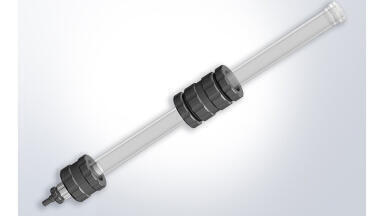
ion-exchange chromatography.
A team from IBIS Technologies, Utrecht University, the University of Twente and Radboud University applied
ion-exchange chromatography to fractionating peptides obtained from human fibrinogen citrullinated in vitro.
They suggest that patient sera offer a "versatile system for mapping modified amino acid-containing epitopes".
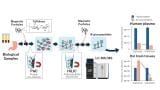
In all, 98 rheumatoid arthritis sera were analysed using the methodology devised by the scientists, which incorporates
ion-exchange chromatography and high-resolution tandem mass spectrometry.
Their findings are published in the latest issue of Arthritis Research & Therapy, whose aim is to translate research into clinical practice.
According to the scientists, testing for the presence of autoantibodies offers a useful way to diagnose rheumatoid arthritis in human patients.
Citrullinated fibrinogen in particular is not a well understood issue, but has been linked with induced arthritis in mice, they add.




 Product directory