
LC-MS
Published over 3 years ago. See the latest and most current information on LC-MS.
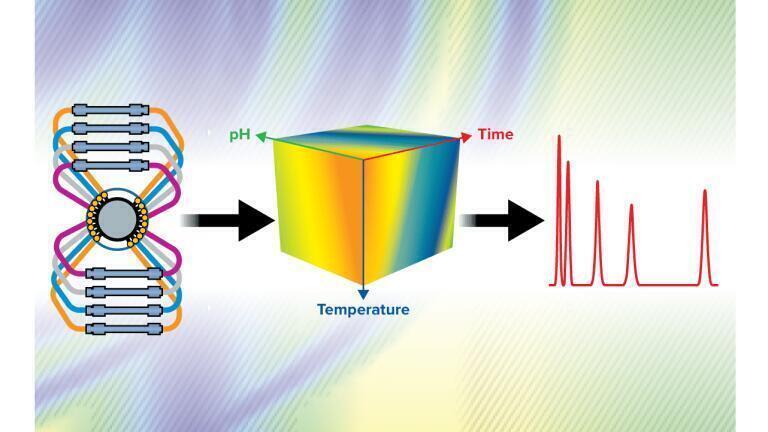
Retention modeling has proven to be a successful technique in accelerating method development and optimization. Scientists at Merck are implementing a dual strategy combining their column screening platform with in silico retention modeling to simplify and accelerate their method development.
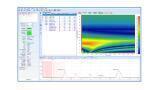
Merck uses the LC Simulator module in ACD/Method Selection Suite to screen a wide range of columns and mobile phases. They then determine the best combinations of columns, stationary phases, and chromatographic techniques most suited for the sample, and conduct a limited number of experiments to build a retention model. Retention modeling involves creating mathematical models using chromatographic parameters to describe the retention behavior of analytes under different conditions. Chromatographic separations can be optimized by using these models to predict the effects of changing experimental parameters on analyte retention. LC Simulator ensures that the correct regression retention model is applied (i.e., second-order temperature models required for proteins) to find optimal selectivity and a suitable retention gradient. Researchers using this workflow can quickly identify optimal and robust conditions with the best separation while minimizing the amount of manual intervention.
The workflow is practical and easy to use and has been applied successfully to various separation techniques including reverse phase, ion exchange chromatography (IEX), and chiral ultra-high performance liquid chromatography (UHPLC). Using this strategy, scientists at Merck were able to streamline the purification of biopharmaceuticals and reduce the time spent developing enantiopurity assays. Results show an excellent correlation between experimental and simulated chromatograms with a retention time difference of less than 0.5%. Additionally, the scientists at Merck have seen a dramatic reduction in method development time and were able to reduce their entire method development from several days to just a few hours. In silico modeling with the LC Simulator module has proven to be an effective tool to conduct fewer experiments and identify optimal conditions and generate robust LC methods faster.
For a more detailed insight into how Merck uses computer-assisted retention modeling to accelerate their method development, read the full case study.

 Product directory