Scientists have employed high-performance liquid chromatography (HPLC) to determine whether Turkish citizens are at risk from vitamin A deficiency (VAD).
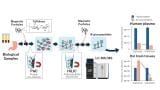
Researchers at Celal Bayar Universitesi in Manisa, Turkey, used HPLC to analyse serum retinol concentrations in 100 apparently healthy children aged between 36 and 48 months.
They explain that serum retinol concentrations of 0.7 micromoles per litre in 15 per cent or more of the population qualify for the World Health Organization (WHO) definition of VAD as a public health problem.
In their study, 89 per cent of children displayed normal concentration levels, with a mean retinol level of 0.98 micromoles per litre across the study group as a whole and an error margin of 0.32 micromoles in either direction.
As a result, the team conclude that VAD represents only a moderate health problem, with 11 per cent of test subjects falling into the danger group as categorised by the WHO.
Founded in 1992, the university celebrated its 18th anniversary on July 11th and says it is rapidly maturing on the world stage.




 Product directory