Principles of high-pressure science have been used by scientists at Northeastern University to boost the performance of
liquid chromatography (LC) and electrophoretic separations.
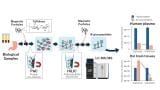
Senior research scientist at the university's Barnett Institute Dr Zoltan Szabo conducts glycan analysis - evaluated through LC and capillary electrophoresis - using a system derived from the works of Dr Percy Bridgman.
Dr Bridgman, a pioneer of ultra-high pressure science, created devices capable of conducting experiments at 100,000 times atmospheric pressure.
He was awarded the 1946 Nobel Prize in Physics in recognition both of his invention of the apparatus and also for the research that he conducted using it.
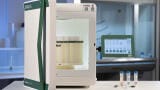
Now, half a century after his death, Dr Szabo uses pressure-cycling technology derived from Dr Bridgman's research to accelerate the release of N-linked glycans by peptides.
John Sterling, editor in chief of Genetic Engineering News, says: "Pressure-cycling technology has definitely caught the attention of an increasing number of scientists."


 Product directory