GC-MS
Published over 10 years ago. See the latest and most current information on GC-MS.
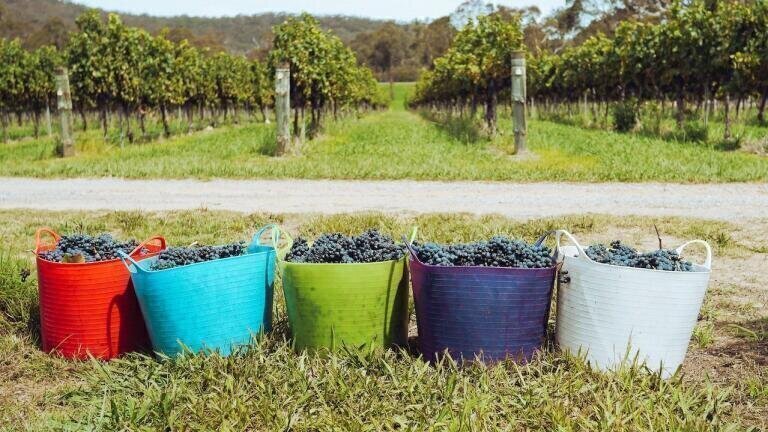
Perhaps one of the most famous varieties of red wine is Pinot noir — found primarily in European wine strongholds such as France, Spain, Italy and Germany, it is also now found in New World countries such as the United States, Chile, Australia and New Zealand.
However, despite its widespread existence, Pinot noir is one of the harder wines to produce due to the Pinot noir grape having a very thin skin. This makes them highly sensitive to any changes in their climate or surrounding environment — and liable to reach peak fruition without their growers’ knowledge.
As any connoisseur of wine knows, it’s imperative to pick the grape at the right time to achieve maximum flavour and quality of the subsequent wine.
Traditionally, wine growers have tested the ripeness of the grapes by concentrating primarily on their colour, acidity and sugar content. A good old-fashioned taste test could yield certain success rates, but had a high margin for error.
However, a new method of determining grape quality focuses more on smell than on acidity, colour or sugar levels. The aroma of a wine is a crucial component in determining its taste, and as such, the exact mix of aroma compounds at the time of harvest will have a significant impact upon the quality of the resulting wine.
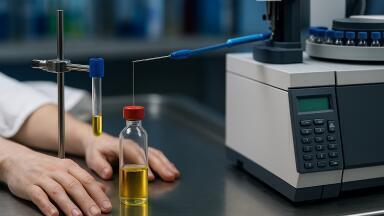
Rather than relying on a simple taste test, however, scientists concentrated on finding a more exact and precise method of quantifying these aroma compounds — as described in the Journal of Agricultural and Food Chemistry. Using gas chromatography coupled with mass spectrometry (GC-MS), the team of researchers were able to identify 49 main compounds which contributed to the wine’s aroma.
Then, by comparing the compounds found in early-harvest and mature-harvest grapes, they pinpointed four compounds which were consistently present at a higher concentration in mature grapes. As a result, the study was able to provide scientists with more accurate information about when is the best time to harvest the grapes in order to produce the highest quality wine.
While this is a relatively new method of analysing the quality of grapes still on the vine and working out the best time to begin the harvest — chromatography has long been used to assess wine quality and to help growers produce top-quality grapes free of taint.
In China, chromatography is one of the techniques routinely used by customs officers to check imported wine as described in the article, Analysing Imported Wine and Sparkling Wine: a Semi-Automated Laboratory Measuring System in use for Customs Checks in China.
In this way, chromatography is ensuring all of us have more access to a better wine, all of the time.

 Product directory


















.jpg)


.jpg)