GC, MDGC
Published over 13 years ago. See the latest and most current information on GC, MDGC.
Thermo Fisher Scientific is pleased to announce a new gas chromatography (GC) method for the analysis and quantifying of residual solvents in pharmaceutical products and excipients as a result of the production process according to the U.S. Pharmaceutical Method (USP) 467. In this method, concentration limits are set for each solvent, and 53 solvents are analyzed and grouped according to their health hazards, including Class 1, Class 2, and Class 3.
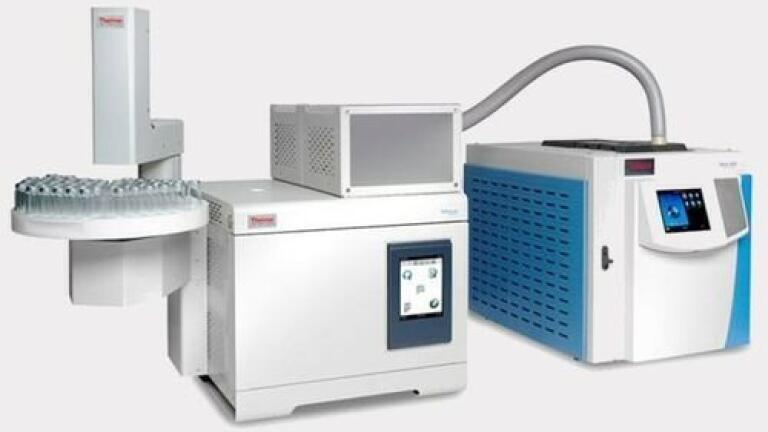
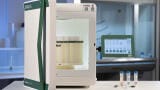
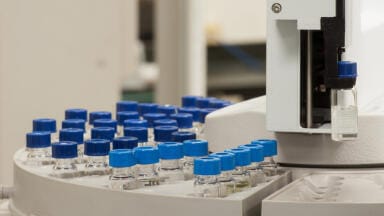
This method features the use of a valve-and-loop sampling system that simplifies headspace analytical methods, the Thermo Scientific™ TriPlus™ 300 Headspace Autosampler, which, combined with innovative chromatography software, met the analytical requirements of the USP Method 467 with full auditing capability.
Application Note 10136: Analyzing Residual Solvents in Pharmaceutical Products Using GC Headspace with Valve-and-Loop Sampling demonstrates the use of this sampling system combined with the Thermo Scientific™ Dionex™ Chromeleon™ CDS software and Thermo Scientific™ TRACE™ 1310 GC to demonstrate excellent resolution and reproducibility in this robust and convenient method for the detection of residual solvents in pharmaceutical products.
Learn more about the TriPlus 300 Headspace Autosampler at www.thermoscientific.com/triplus300.


 Product directory












.jpg)