Gas chromatography
Published over 7 years ago. See the latest and most current information on Gas chromatography.
Ambient air is polluted by many Volatile Organic Compounds (VOCs) coming from anthropogenic and natural sources. Due to the large number of these molecules, there is a need to combine their separation and quantification by Gas Chromatography (GC) with Flame Ionisation Detection (FID) and their individual identification by Mass Spectrometry (MS).
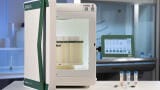
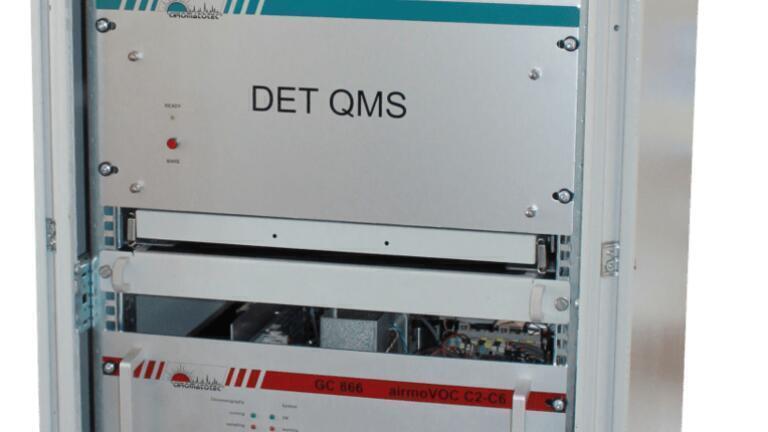
With this aim, Chromatotec® has developed a turnkey solution which allows the automatic quantification and identification of VOCs: the airmoSCAN XPERT. It is a combination of two robust instruments: a dual GC-FID for the monitoring of C2 to C16 compounds (airmoVOC expert) and a process Quadrupole MS. The instrument allows the monitoring of up to 123 VOCs at ppt, ppb, ppm and % levels in only 30 minutes.
Thanks to its many advantages (easy to use, fully automatic with no gas bottles, intrinsically linear, precise and very stable), it guarantees more than 4 months stability for an MS system and years of stability for a FID system. airmoSCAN XPERT has been implemented in fixed and mobile laboratories for urban and industrial field analysis all over the world.
Among its main industrial applications are those that require very high sensitivity, such as the air analysis in clean air rooms with airmoTWA (including a multiplexer to analyse up to 16 streams).

 Product directory