HPLC, UHPLC
Published over 4 years ago. See the latest and most current information on HPLC, UHPLC.
In smoking cessation studies, the levels of several biomarkers are considered in order to evaluate the people’s exposure to tobacco smoke. The well-known nicotine is typically considered as one of these biomarkers, but it has a half-life of only two hours in the human body. Cotinine is the main metabolite of nicotine and has a half-life of about eighteen hours. It is one of the widely investigated biomarkers related to tobacco products, however, when patients undergo smoking cessation and replace nicotine with nicotine gums and patches, their cotinine levels are the same as smokers.
Therefore, more universal biomarkers such as 4-(methylnitrosamino)-1-(3-pyridyl)-1-butanol (NNAL) which is a metabolite of the lung carcinogen NNK (4-(methylnitrosamino)-1-(3-pyridyl)-1-butanone) are typically evaluated. Its much longer half-life (10-40 days) makes it a better marker for long-term studies.
During tobacco smoke consumption human cells are submitted to oxidative stress. As a result, 8-hydroxy-2’deoxyguanosine (8-OHdG), a specific stress marker related to carcinogenesis, is produced in the human body. In addition to DNA oxidation, the exposure to tobacco smoke can also lead to DNA methylation which is indicated by the biomarker 7-methylguanine (m7Gua).
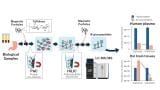
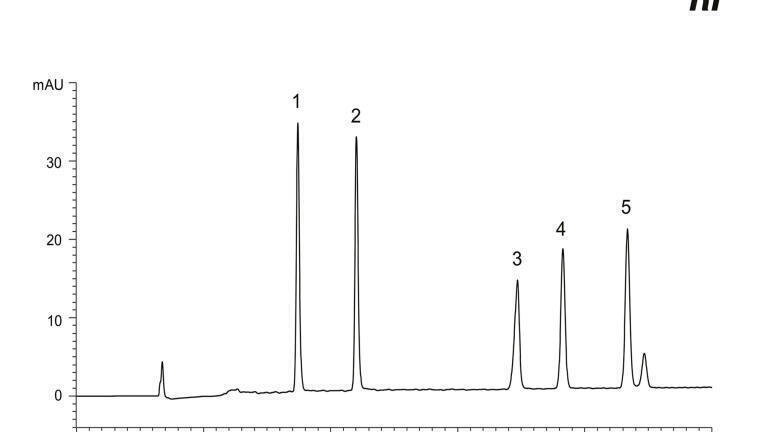
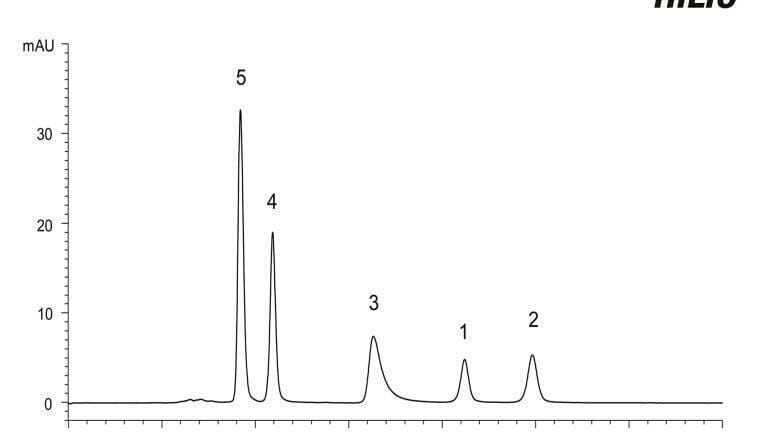
This application note shows the analysis of the five markers mentioned above using two different separation modes. Even though the analytes’ hydrophobicity ranges from quite hydrophobic to hydrophilic, both columns provided highly resolved peaks. A YMC-Triart C18 column was used for the analysis in RP mode, whilst a YMC-Triart Diol-HILIC column was chosen for HILIC mode. As UHPLC columns were used, fast separations under 3 and 5 minutes could be obtained.




 Product directory