
Columns (LC)
Published over 3 years ago. See the latest and most current information on Columns (LC).
Today, oligonucleotides have become more and more important in genetic testing, research, and forensics. To date a variety of oligonucleotide-based approaches have been developed for different pharmaceutical applications. Therefore, clean and reliable oligonucleotide standards are necessary for various analytical methods. One of these standards are RNA markers which are RNA fragments of a certain size which are used in gel electrophoresis to estimate the size of other RNA fragments.
The electron-rich backbone of oligonucleotides can cause irreversible adsorption on metal parts. This is a major issue for reversed phase liquid chromatography analyses as standard equipment and hardware such as tubing, frits or the standard column-body is made from stainless steel. The oligonucleotides bind through ionic interactions with the positively charged metal oxide layer of the metallic surfaces. This effect is enhanced when working at low to neutral pH as metals become more electropositive.
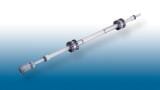
To overcome these challenges bioinert systems and columns such as the recently introduced YMC-Accura Triart columns are beneficial. YMC-Accura Triart columns have a bioinert coating on all surfaces, including the frits, to prevent any unwanted ionic interactions.
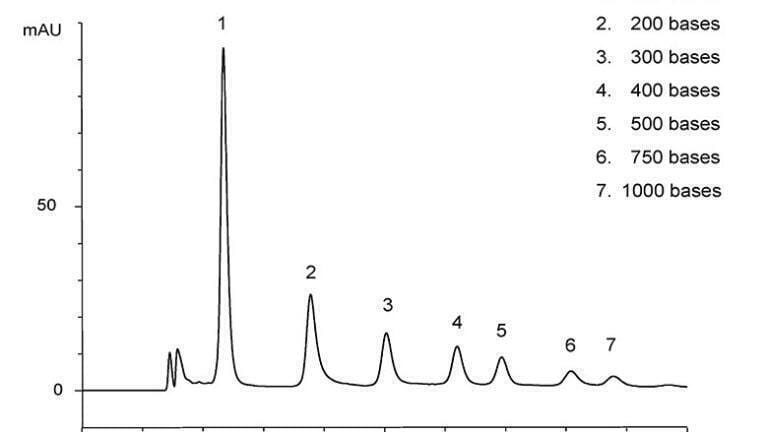
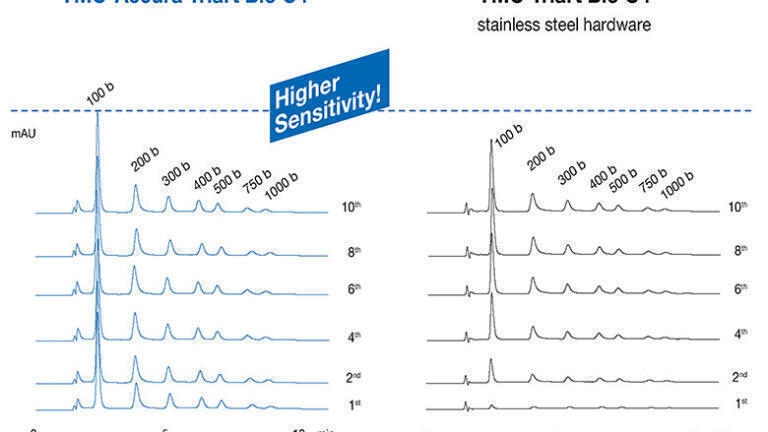
This application note shows the separation of 7 RNA markers from 100–1000 bases using a YMC-Accura Triart Bio C4 column at pH 7 and 80 °C (figure 2). All 7 peaks are very well resolved and show excellent recoveries from the first injection. Figure 3 is showing 10 consecutive injections using the YMC-Accura Triart Bio C4 as well as the corresponding standard YMC-Triart Bio C4 stainless steel column. The bioinert YMC-Accura Triart Bio C4 column provides reproducible results. In contrast, the same separation using a standard stainless steel column requires pre-conditioning and provides much lower sensitivities even after 10 injections.

 Product directory















.jpg)
.jpg)