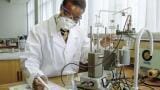
Scientists have used
liquid chromatography tandem mass spectrometry (LC-MS/MS) to determine the extent to which environmental waters have been contaminated with pharmaceutical products.
A study published by the Chemistry Central Journal and undertaken by a team from the School of Pharmacy and Chemistry at Kingston University, London, noted that the frequent use of a wide range of drugs meant that various environmental waters have been found to be contaminated with pharmacologically active substances.
Following an investigation that identified stanozolol, a synthetic anabolic steroid, in the hair samples of people living in Budapest, the scientists hoped to identify possible sources of steroid contamination.
The team took water samples from bottled water, the Danube river (collected from December 2009 to November 2010) and from urban tap water from Budapest city.
They found that none of the bottled waters contained stanozolol, compared to one sample out of six from Budapest and three samples out of six from the Danube that had traces of the steroid.
As a result, the scientists developed an efficient, rapid, reproducible, sensitive and robust testing system for the detection of stanozolol in aqueous matrices.



 Product directory