Scientists have investigated the long-lasting effects of certain insecticides with the use of
quantitative analysis methods.
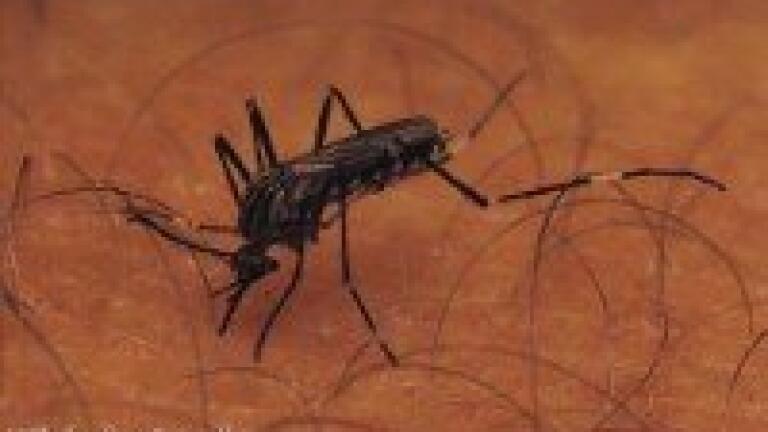
In a study published by the Malaria Journal, a team from South Africa noted that insecticide dichloro-diphenyl-trichloroethane (DDT) is widely used in indoor residual spraying (IRS) to control malaria due to its longer residual efficacy in comparison to other World Health Organization (WHO) alternatives.
Unfortunately, DDT insecticides are controversial so the scientists sought to identify what stabilisation processes could be used to find a more acceptable, but just as effective, alternative.
Gas chromatography spectrograms showed that phosphogypsum stabilised the insecticides the most against alkaline degradation.
"Bioassay experiments indicated that incorporating insecticides into a conventional paint binder or adsorbing them onto phosphogypsum can provide for extended effective life spans that compare favourably with DDT's performance under accelerated ageing conditions," the report stated.
The scientists found that insecticides adsorbed on phosphogypsum and sprayed on cattle manure coated surfaces had a superior performance to DDT, so could provide an acceptable alternative.

 Product directory











-(1).jpg)