HPLC, UHPLC
Published over 14 years ago. See the latest and most current information on HPLC, UHPLC.
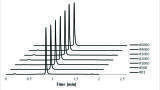
A method was developed to analyse three model aminoglycosides (neomycin, apramycin, and kanamycin) using a zwitterionic HILIC (hydrophilic interaction liquid chromatography) stationary phase and mass spectrometry (MS) detection. High separation efficiency and good peak shape were obtained with an optimal combination of mobile phase composition and gradient profile. Gradient elution proved to be reproducible and a good way to combine both HILIC and electrostatic interactions to obtain unique selectivity. The possible lower limit of quantification (LLOQ) was under 0.25 μg/mL using HILIC coupled with a single quadrupole ESI-MS instrument.
Introduction
Aminoglycosides are bactericidal antibiotics that have amino-modified sugar in their structures [1-3]. This particular group of antibiotics are widely used as clinical and veterinary medicines to treat infections caused by gram-negative or some gram-positive organisms, and are classified as bactericidal agents because of their interference with bacterial replication. However, theses antibiotics can also cause varying degree of ototoxicity and nephrotoxicity. McGlinchey et al. described in a recent review that the overuse of antibiotics and exposure to the food animals are the two major routes attributed to the antibiotic resistance [3]. Therefore, it is very important to develop sensitive and reliable analytical methods for determining and monitoring aminoglycosides residue in different sample matrices.

 Product directory