Air monitoring
Published over 9 years ago. See the latest and most current information on Air monitoring.
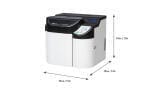
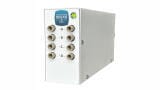
There has always been a difficulty in accurately quantifying benzene in air. Until recently, the only viable method of specifically measuring benzene at environmental levels (10 – 50 ppb) was through the use of grab samples and GC/MS. The DV3000 UV Gas Analyser from Duvas Technologies has the ability to accurately analyse a wide range of gases, including BTEX gases, simultaneously to ppl levels without cross-interference between species.
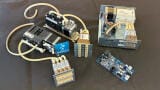
The DV3000 uses closed path spectroscopy and a DOAS-based technique to feed emission data to an advanced algorithm. Each species corresponds to a unique absorption spectrum; the algorithm is able to match the species via this ‘fingerprint’ allowing for detection and differentiation between species in complex mixtures. The DV3000 design performs analyses in a stationary and mobile mode. Using high performance Lithium battery packs, field surveys can be performed for up to six hours. These packs can easily be hot-swapped during analysis for uninterrupted operation and prolonged field deployment. The HEPA filter and mesh system prevents mirror contamination from particles greater than 0.8 microns. A Bluetooth and GPS option enables data to be streamed in real time onto an Android tablet.
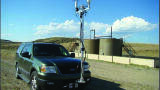
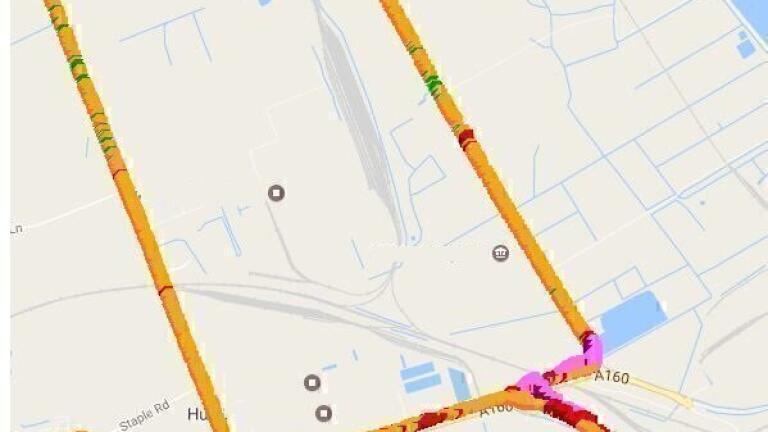
In the examples shown, a DV3000 instrument was used to perform a survey of public roads around two chemical plants in Immingham in the UK in August 2016. The instrument was mounted in an automobile and driven around the plants where it was Bluetooth and GPS enabled, allowing for results to be viewed in real time on an Android tablet during the analysis of the areas. Additionally, this feature allows for data to be pinpointed to an exact location during the reprocessing of data at a later time. The highest benzene levels were close to 100 ug/m3 or approximately 30 ppb, while ethylbenzene levels peaked to 225 ug/m3, approximately 50 ppb.

 Product directory